The Aesthetic
Old Money Style for Men
The quiet, generational aesthetic — heritage fabrics, a tight palette, and pieces made to outlive the trend that named them.
9 min read · Published August 2026
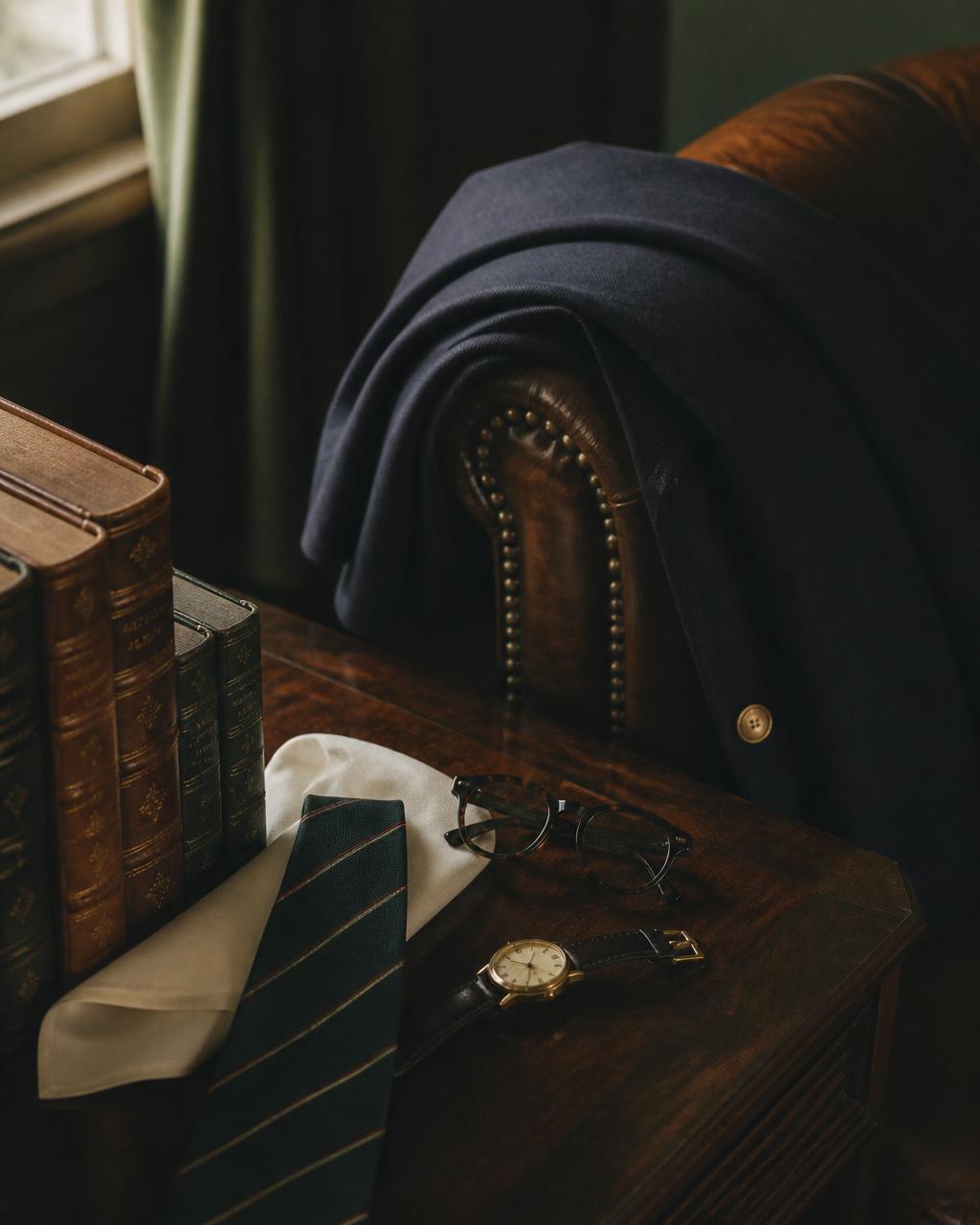
"Old money style" is a trend name for something far older than the phrase: the way men have dressed for generations when clothing was meant to last, to be inherited, and to draw no attention to itself. It is not logos, not flash, not the season's silhouette. It is a navy blazer that fits the same at thirty as it does at fifty. At Thomas Alan, this is the aesthetic we have built the house around — so what follows is the real framework, not a costume.
What "old money" actually means
The look is shorthand for inherited discretion. Generations of quiet wealth dressed in natural fibres, muted tones, and well-cut classics — the country-club blazer, the tennis sweater, the loafer worn soft. What reads as "effortless" is the product of restraint: fewer colours, better cloth, and a refusal to telegraph expense. The money, in this aesthetic, is never on display.
The palette: the muted spectrum
Old money style lives inside a narrow band of colour. Everything reads as if it were faded gently by sun and saltwater rather than printed onto a rack.
- Navy — the anchor. A navy blazer is the single most useful garment a man can own.
- Off-white and ecru — never optic white. Think sailcloth, linen, and aged cotton.
- Tan and camel — the warm neutrals of a field coat or a tennis sweater.
- Charcoal and slate — for the trouser and the overcoat, the grown-up greys.
- Deep evergreen and burgundy — the only accents, used sparingly in a knit or a tie.
When the wardrobe sits inside this range, every piece pairs with every other. There are no clashing mornings, no orphan shirts. The restraint is the luxury.
The fabrics: natural, heritage, honest
The aesthetic rejects synthetics outright. The cloth does the talking, and the cloth is natural.
- Wool and flannel — for jackets, trousers, and the winter overcoat. Heavier weights age beautifully.
- Linen — rumpled, breathable, and unmistakable. Summer's signature fabric.
- Cashmere and merino — the knits. Soft enough to wear against the skin, dense enough to hold their shape.
- Oxford and poplin cotton — for the shirts. A button-down in oxford cloth is the archetype.
- Tweed and corduroy — the country cousins, for the colder months and the off-duty weekend.
The pieces: a complete old money wardrobe
You do not need a hundred garments to wear this aesthetic well. You need the right dozen, cut properly and kept long.
- The navy blazer — single-breasted, unstructured in the shoulder, brass buttons optional.
- The button-down shirt — oxford cloth, white and pale blue. The collar that never dates.
- The tennis sweater — a crewneck or v-neck in cream or navy, with or without the band.
- The chinos — flat front, mid-rise, in stone or khaki. Hemmed to a slight break.
- The tailored trouser — grey flannel in winter, a light wool in summer.
- The loafer — penny or tassel, in brown leather, worn without socks in the heat.
- The Oxford shoe — black, for the city. The shoe a man can be married and buried in.
- The overcoat — camel or charcoal, knee-length, cut to layer over a jacket.
- The linen shirt — for the coast. Relaxed collar, soft, and meant to crease.
- The cashmere scarf — the finishing layer, in a tonal colour, never a logo.
How to wear it: the rules of restraint
The aesthetic fails the moment it tries too hard. Three principles keep it honest.
Fit before fashion. A well-cut chino and a properly tailored blazer will always outlast a trend. Have the shoulders set, the sleeves shortened, the trousers hemmed. The cloth is only half the job; the tailor is the other half.
Logos are absent. The old money wardrobe is anonymous. The quality announces itself in the hand of the fabric and the line of the cut — never in a name stitched across the chest.
Maintenance is the ethic. Brush the blazer. Air the knit. Re-sole the shoe. A wardrobe kept this way costs less over a decade than four seasons of fast fashion, and looks infinitely better doing it.
Why it endures
Trends name things after the fact. "Old money style" is simply the label we have lately given to the way men of taste have always dressed — quietly, in natural cloth, with pieces meant to be kept and passed on. The reason it returns every few seasons is that it never really leaves. It is the aesthetic of a wardrobe built to outlast the conversation about it.