
Shop Journal
The Studied Intake of a Better Weekend: One Man's 30-Piece Wardrobe
September 7, 2026 · 4 min read
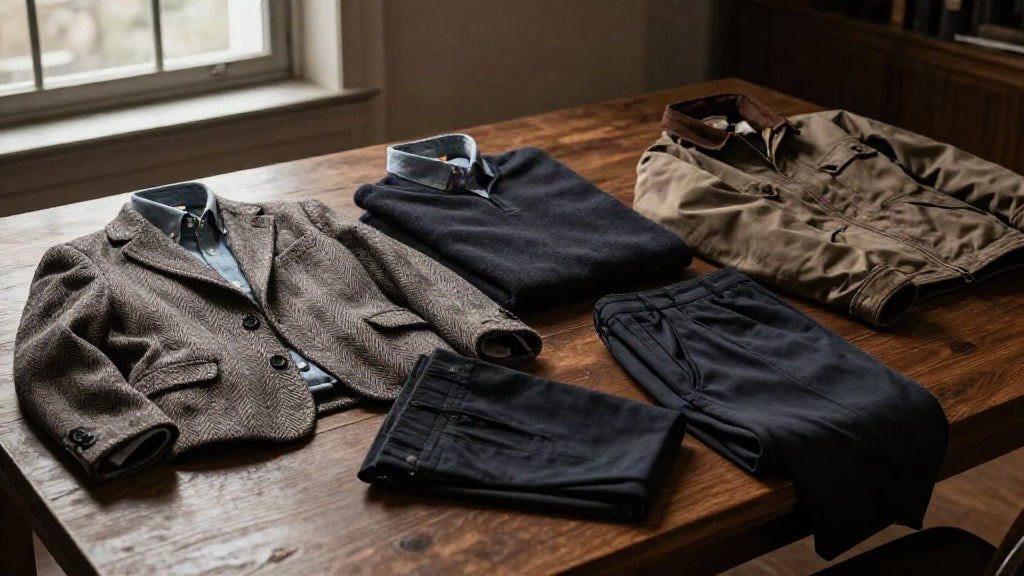
The Studied Intake of a Better Weekend
There is a particular silence that settles over a closet in the middle of the night, when the house is still and a man stands before the rails with nothing but the weight of his own choices. For most of us it is a silence we avoid. We reach for the same two shirts, ignore the rest, and quietly resent the crowding we have allowed to accumulate. But for one reader of Thomas Alan, that silence became the beginning of something deliberate: a thirty-piece wardrobe, built not by impulse but by intention.
This is the case of a man who stopped buying and started curating. His method is worth studying, because it is not about fashion at all. It is about the quiet arithmetic of a better weekend.
The Trouble With a Bloated Closet
Our subject began, as so many do, with a closet that promised more than it delivered. Racks sagged under shirts bought in haste, trousers in three different waist sizes, and jackets that had never once been worn in public. He estimated the whole at nearly a hundred and forty pieces, and admitted, without much shame, that he reached for perhaps a dozen of them.
The problem was not a lack of clothing. It was a lack of decision. Every morning he stood before an overfull rail and made the same exhausting negotiation, and the choices he made were rarely the ones he actually wanted. A wardrobe should save a man time and thought, not consume it.
So he did the unglamorous work. He emptied the closet entirely, laid every piece on the bed, and asked a single question of each: does this earn a permanent place in a thoughtful life? The answer, for most of it, was no.
The Thirty-Piece Roster
What remained was a lean, honest collection built around a few classic menswear wardrobe essentials. The spine of it was tailored: a handful of cotton chambray shirts in solid tones, a single performance poplin in a Denton plaid for the days that demanded a little more structure, and a rotation of men's tailored chinos in a cut that could move from the office to the table without apology.
Outerwear carried the weight of the weather and the mood. A denim-co Draper Harrington jacket became his answer to the city's fickle afternoons - the kind of classic outer layer that reads as considered without trying. For colder weeks, a Percy wool herringbone sport coat supplied the slow weight of a well-cut garment against the cold, the fabric doing the talking that a man need not.
The rest was restraint: a few fine knit pullovers, honest denim, and the small objects that belong on a set table rather than in a drawer. Thirty pieces in all, each one able to stand alone and to combine with the others in a hundred quiet ways.
The Rinse-and-Release of a Conscious Wardrobe
The discipline, he insists, is not in the one great purge. It is in the rinse and repeat. When a new piece enters the house, an old one must leave. When a shirt begins to tire, it is retired with thanks rather than pushed to the back of the rail. The wardrobe is not a static possession; it is a living thing that must be tended, like a room that wears in rather than out.
He applies the same rule to the act of buying itself. No purchase is made on impulse, and none is made without asking how it will serve the whole. A new Harrington jacket must earn its place beside the herringbone sport coat; a fresh chambray must justify the space it takes from an older brother. This is the studied intake of a better weekend - buying fewer, finer things, and giving each one the room to be worn.
What the Weekend Taught Him
The difference, he says, became visible almost immediately. Mornings grew shorter and calmer, because the choice was already made. Everything in the closet went with everything else, so there was no negotiation, only assembly. He dressed for the day, the weather, and the occasion, and he did it in minutes rather than in the slow grind of indecision.
More than that, the restraint changed how he felt about what he owned. A smaller wardrobe is not a smaller life; it is a more deliberate one. Every piece carries a memory and a purpose, and none of it is wasted. He found that he wore his clothes more, cared for them better, and enjoyed them more deeply than he ever had the crowded version.
A Method Worth Borrowing
You need not begin with a hundred and forty pieces to feel the benefit of this arithmetic. The method scales to any closet, any budget, any season. Empty the rail. Ask the question. Keep only what earns its place. And from here forward, let every new acquisition pass the same test before it crosses the threshold.
The goal is not minimalism for its own sake. It is the quiet confidence of a man who knows exactly what he owns, why he owns it, and how it will serve him. That is the essence of the considered wardrobe, and it is available to anyone willing to stand before the rails and listen, for once, to the silence.
A better weekend begins the night before, in the calm of a closet that has been made deliberate. We would invite you to begin yours with fewer, finer things - and to let each one earn the permanent place it deserves.